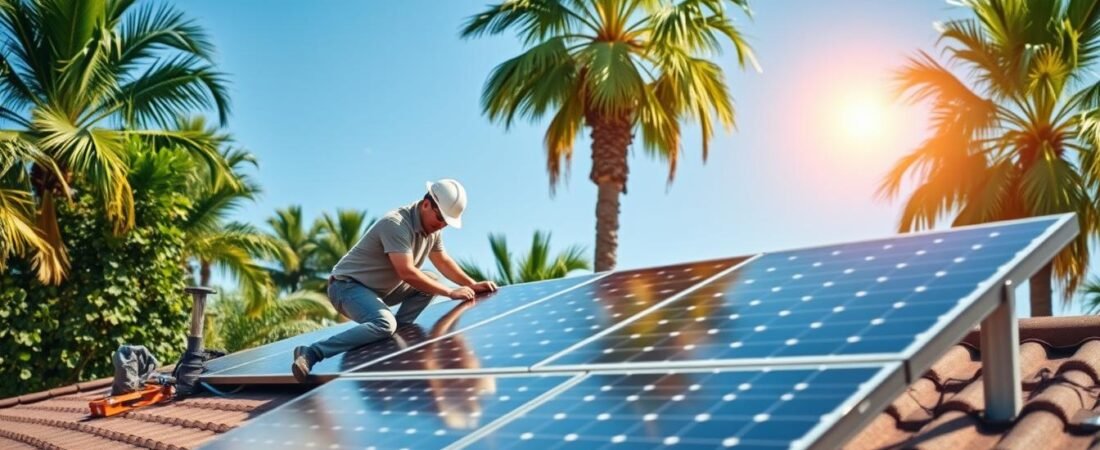
Curious what a home system will cost today? As of April 2026, the average price is about $2.20 per watt. For a typical 14.71 kW system, that equals roughly $32,365 before incentives.
Many homeowners see real savings. Over 25 years, average electricity savings reach about $52,080, and the payback period sits near 11.09 years. After payback, the system often delivers low-cost power for the remainder of its 25–30 year lifespan.
Upfront cash can drop with tax credits and local incentives, and comparing quotes from multiple reputable companies helps you find the best financing and monthly bill outcome. Trusted installers can also account for roof size, utility rules, and expected output in watts or kW.
Bottom line: A properly sized system is an investment that many homeowners recover in about a decade and then enjoy decades of reduced bills and cleaner electricity.
Understanding the Solar Panel Installation Cost Florida Landscape
With per-watt prices about 10% below the national average, the local market is attractive for many homeowners. The current average sits near $2.71 per watt, which helps lower the upfront price of a full residential system.
Most standard systems qualify for the 30% federal tax credit. That credit lowers the effective outlay and shortens the payback period for many buyers.
Financing options matter. Many people use a loan to spread payments over several years. This keeps monthly expenses close to current utility bills while you build equity in your home.
“Locking in predictable energy costs for 25 to 30 years protects your home from rising utility rates.”
- Per-watt price helps you compare quotes from different companies.
- System size and chosen equipment shape total costs.
- Reputable installers check your roof and expected power output before quoting.
| Factor | Typical Impact | Why it Matters |
|---|---|---|
| Price per watt | High influence | Determines baseline project price |
| Federal tax credit | ~30% reduction | Reduces net price and improves savings |
| Financing type | Variable | Changes monthly payments and long-term savings |
| Roof suitability | Moderate | Affects panel layout and system output |
Average Pricing and System Size Requirements
Using a per-watt benchmark helps homeowners compare offers on equal footing, regardless of system size. That metric removes confusion when bids list different equipment or warranties.
Cost Per Watt Analysis
Price per watt is the standard way to normalize quotes. It shows how much you pay for each unit of power and makes bids easier to review.
For example, a 5 kW system typically runs about $11,002, while a 10 kW setup is around $22,005. Those figures illustrate how per-watt math scales with size.
Impact of System Size
Your total expense ties directly to chosen size. Homes with higher electricity use or ample roof area often select larger arrays to maximize long-term savings.
- Smaller systems fit tight roofs or modest budgets.
- Larger systems often lower the price per watt and increase lifetime savings over 25 years.
When you compare quotes, ask installers for a clear price-per-watt breakdown and an estimate of how many panels you’ll need to offset utility bills.
Key Factors That Influence Your Total Investment
Several site-specific factors shape the final project figure. Roof orientation, material, permit fees, and equipment choice all change how much you pay and how much power you get over the life of a system.
South-facing roofs improve output and trim the required system size. Other orientations usually need more panels or higher-efficiency modules to meet the same goal.
Labor for installation varies by roof type. Asphalt shingles are easiest and cheaper. Clay tiles or steep roofs add time and extra labor costs.
- Permitting and inspections typically add about 3% to total costs.
- High-efficiency solar panels cost more up front but often return better power across 25 years.
- Compare reputable companies to balance price, warranty, and workmanship.
| Factor | Typical Impact | Why it Matters |
|---|---|---|
| Roof orientation | High | Determines output and needed size |
| Roof material | Moderate | Affects labor and installation time |
| Permits & inspections | Low (~3%) | Required for safe, code-compliant work |
Bottom line: weigh these factors — and available tax credit or incentives — when comparing quotes so you get the best long-term value for your home.
Leveraging Federal and State Tax Incentives
Combining federal and state incentives often shortens the time it takes to reach payback. These benefits lower the net price and speed up savings for many homeowners.
Here’s how the main incentives work and what to document when you file.
Federal Solar Tax Credit
The federal tax credit covers 30% of the system purchase for tax-paying homeowners across the U.S. Claiming that credit reduces your upfront net expense and improves payback.
Property Tax Exemptions
Florida offers a property tax exemption for the added value from rooftop panels. This means the home’s assessed value won’t rise because of the system.
Sales Tax Benefits
The state also provides a permanent sales tax exemption for qualifying systems. That lowers the price at purchase and reduces initial outlay.
“Use trusted companies to help gather documentation and ensure you claim full credits.”
| Incentive | What it Covers | Impact |
|---|---|---|
| Federal tax credit | 30% of system purchase | Large immediate reduction in net cost |
| Property tax exemption | Added home value from panels | No increase in annual property tax |
| Sales tax exemption | State sales tax on equipment | Lower upfront price at purchase |
Bottom line: combine these incentives with a clear paperwork plan to shorten payback and boost long-term savings.
Comparing Solar Financing and Payment Methods
Your payment method shapes monthly cash flow and the total amount you’ll pay over decades.
Paying with cash eliminates interest and gives the best long‑term savings. You own the system immediately and avoid monthly fees. That typically delivers the highest return over a 20–30 year horizon.
A loan lowers upfront outlay and speeds installation for many homeowners. But remember: interest increases the overall price. Read terms carefully to ensure monthly payments fit your budget.
Power purchase agreements (PPAs) are not an option here. Third‑party PPAs are currently banned, so most homeowners must buy or finance their own panels.
Compare offers from reputable companies to see clear side‑by‑side numbers: cash price, loan APR, and projected electricity savings. That makes it easier to pick the path that matches your goals.
“Owning your system tends to maximize savings and build home value.”
Long Term Savings and Net Metering Benefits
When your array produces more than you use, the grid becomes a virtual battery that saves you money.
Net metering lets homeowners sell excess generation back at the retail electricity rate. Major utilities like Florida Power & Light and Duke Energy Florida participate. Credits show up on future bills and reduce what you pay when output falls.
Over a 25-year system life, these monthly credits can add up to substantial savings. Reduced reliance on the grid also shields your budget from rising utility rates.
Many local companies will model your historical usage and net metering rules to estimate savings. Ongoing monitoring helps you maximize monthly credits and spot performance issues early.
“Credited surplus energy can shorten the payback period and boost lifetime savings.”
| Benefit | How it works | Typical impact (25 years) |
|---|---|---|
| Retail-rate credits | Excess energy offsets future electricity charges | Reduces lifetime bills by thousands |
| Grid backup | Use credits when panels aren’t producing | Less reliance on utility power |
| Performance monitoring | Track output to maximize credits | Improves long-term savings |
Evaluating Your Roof and Property Suitability
Start with a roof check. A quick inspection reveals if the structure can bear the weight of racking and modules for a new system.
If your roof is near the end of its life, replace it before mounting panels. Doing this first avoids future removal and reinstallation costs and protects your long-term investment.
Orientation matters. South-facing roofs yield the best energy production, but other directions can work with the right array size and layout.
A professional will assess framing, age, and available space to recommend the optimal system size. They also note if reinforcement is needed to handle the load safely.
“A solid, well-timed roof upgrade prevents extra costs and keeps your system performing for many years.”
- Get a written roof condition report from installers.
- Plan replacements now rather than after a few years of operation.
- Choose experienced companies for a clear, documented assessment like a professional roof assessment.
How to Select a Reputable Solar Installer
Finding the right contractor matters. Start by narrowing local companies with proven experience and clear, written quotes.
Vetting Local Companies
Look for certification and track record. Choose installers with NABCEP certification and at least five years in the field. That signals technical skill and real-world experience.
Read local reviews and ask for references from recent customers. Confirm the firm handles permits and inspections so your system meets code and works long term.
Comparing Multiple Quotes
Get at least three quotes. Comparing multiple bids often reveals better prices and helps you avoid overpaying. Research shows comparing three providers can save up to 20% on total project costs.
- A strong quote lists total price, equipment model, expected savings on your monthly bill, and warranty terms.
- Ask about financing options — cash purchase, loans, and expected monthly payments — so you can compare true out‑of‑pocket impacts.
- Verify installer insurance, timeline, and who will handle post‑install service.
“Choose a partner who explains price, tax credits, and maintenance clearly — it protects your money and your home’s energy future.”
Bottom line: Take your time. The right choice means fewer surprises, better performance from your panels, and higher lifetime savings.
Assessing the Lifespan and Maintenance of Your System
Expect your system’s output to slowly fall over decades; knowing that rate helps you plan savings and replacements.
Most arrays are designed to last 25–30 years. With routine care, some continue producing for 35–40 years.
Degradation rates show how much efficiency you lose each year. Lower rates mean more energy over the life of the product.
Routine cleaning and occasional inspections keep performance high. Monitoring software flags drops in output early.
“Proper care and monitoring extend useful life and protect long-term value.”
- Warranties: most reputable firms include long equipment and workmanship guarantees.
- Quality matters: higher-grade panels often show slower degradation.
- Simple upkeep: cleaning and tightening hardware helps maintain output.
| Topic | Typical Range | Why it Matters |
|---|---|---|
| Lifespan | 25–30 years (up to 40) | Frames expected savings and replacement timing |
| Degradation rate | ~0.3–0.8%/year | Determines long-term energy production |
| Maintenance | Annual or biannual checks | Preserves performance and limits unexpected costs |
For help setting up a maintenance plan, see maintenance services from a trusted local provider.
Conclusion
Combining accurate usage data with local incentives gives a realistic picture of your long-term savings. Use your monthly electricity numbers to size a system that fits your roof and budget.
Claim the federal tax credit and check net metering rules to lower the net price and shorten the payback period. Compare multiple quotes from reputable companies so you can see price per watt, warranty terms, and financing side by side.
With basic maintenance, panels will produce reliable power for many years. For a quick guide on typical numbers and an example of average figures, see the average cost of solar panels.