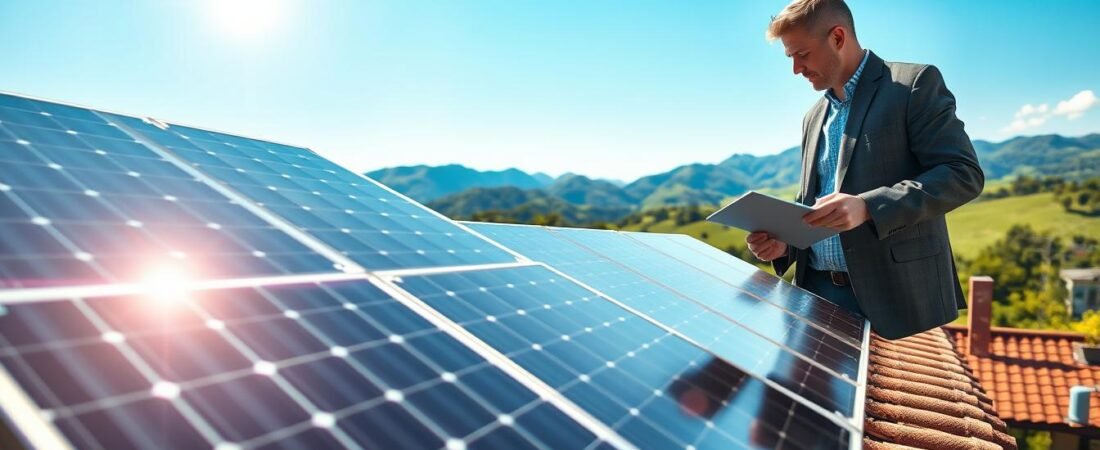
Thinking about a home energy upgrade? In West Virginia, the average system price sits at roughly $3.08 per watt as of April 2026. That baseline helps homeowners compare offers and plan a smart investment.
Most local systems average about 14.53 kW, which means a sizeable up-front purchase but steady savings over the system’s 25–30 year lifespan. Typical payback is near 13.76 years, after which your generated power effectively cuts utility bills.
Getting multiple quotes is free and can save thousands over time. Compare installers, financing options like a loan or PPA, and local net metering rules to boost value and performance.
For a detailed breakdown of per-watt prices and system-size examples, see the full West Virginia guide at solar panel cost WV. This quick start will help you make informed choices and lock in predictable energy bills for years to come.
Understanding the Solar Panel Cost WV Landscape
Adoption in West Virginia picked up pace quickly, and that shift matters for anyone weighing an upgrade. The state still ranks 49th for installations, yet homeowners installed roughly 300% more equipment in 2021. That spike shows growing trust in distributed energy.
Prices vary by company because every roof and household needs a different system. Get quotes that reflect your home’s orientation, shading, and energy use. Local incentives and the federal tax credit also change net expenses, so factor those into any estimate.
Think long term. Over the next 25 years, performance depends on equipment quality and installer skill. A well-sized setup usually pays back its initial outlay in years and reduces monthly utility bills.
- Market growth brings more competitive offers.
- Roof shading can cut annual output significantly.
- Local incentives make upgrades more accessible.
| Factor | Impact on Price | Long-term Effect |
|---|---|---|
| Equipment quality | Higher upfront | Better output and warranty |
| Site conditions | Variable (roof, shade) | Affects annual energy yield |
| Incentives | Reduces net expense | Shortens payback period |
Average Pricing and System Size Considerations
Before you pick equipment, get familiar with how system size affects overall pricing. This helps homeowners set a realistic budget and estimate long-term savings.
Cost Per Watt Explained
Price per watt is the simple metric installers use to compare offers. It bundles equipment and labor into a single number.
The average per watt lets you compare a small home setup to a larger array. A 5 kW system in west virginia typically runs about $15,376, while a 10 kW option is near $30,753.
Impact of System Capacity
Larger installations usually lower the per watt price because of bulk purchases and more efficient use of the roof area.
- Size matters: Your roof and past electricity use shape the ideal system size.
- Efficiency and power output influence long-term savings over 25 years.
- Federal and local incentives can trim the net price and shorten payback.
“Choosing the right capacity can be the difference between a quick payback and a long wait.”
Key Factors That Influence Your Total Investment
Several key variables shape what you ultimately pay for a rooftop energy system in West Virginia. Think beyond sticker price: equipment, site conditions, and incentives all matter.
Equipment Quality and Efficiency
High-efficiency panels cost more up front but produce more power per watt. That makes them a smart choice for homes with limited roof size.
Your household electricity use drives the system size. A bigger usage profile requires more panels and raises the initial investment.
- Installation varies by roof complexity and any needed electrical upgrades.
- Local incentives and the federal tax credit can reduce the price you pay today.
- Compare brands using cost per watt to find the best long-term value.
| Factor | Short-term effect | Long-term effect |
|---|---|---|
| Equipment quality | Higher price | Better output over 25 years |
| Roof complexity | Higher installation | May increase maintenance |
| Incentives | Lower net price | Shorter payback |
“Investing in quality parts often pays off across the system’s lifetime.”
Maximizing Savings Through Federal and Local Incentives
Claiming available tax breaks is one of the fastest ways to reduce what you pay for a home system.
The federal solar investment tax credit (ITC) currently covers 30% of the system’s value. You claim the federal tax credit on the tax return for the year after installation.
Local incentives can stack with the ITC to lower net price. Many west virginia companies help homeowners file paperwork and estimate final savings.
- Loan-friendly: Financing still allows you to claim the federal tax credit and offset interest costs.
- Net metering: Sell excess power back to the utility to cut monthly electricity bills.
- Ask for clarity: When requesting quotes, confirm how the tax credit and local incentives apply to your system.
“Use both federal and local incentives to accelerate your return, especially over 25 years of expected savings.”
| Incentive | What it covers | When claimed | Typical effect |
|---|---|---|---|
| Federal ITC (30%) | Percentage of system value | Tax year after installation | Reduces upfront net cost |
| State/local rebates | Fixed rebate or per-watt credit | At purchase or rebate claim | Shortens payback period |
| Net metering | Credits for excess energy | Monthly utility billing | Lowers monthly electricity bills |
Evaluating the Payback Period and Long-Term Value
Before you sign any agreement, run the numbers to see when your system starts paying for itself. A clear payback estimate makes comparisons easier and highlights the best financing path for your household.
Calculating Your Return on Investment
Start with the total installed price, subtract available incentives, and divide by expected annual savings.
If you claim the federal tax credit and factor in local rebates, the average payback period in west virginia is about 13 years. After that, generated power essentially lowers your utility bills.
Electricity Bill Savings
Homeowners in the state can expect large lifetime benefits.
- Average 25-year savings: around $66,724 on electricity.
- Net metering helps shorten the break-even by crediting excess power sent back to the grid.
Property Value Increases
Beyond monthly savings, systems add resale value. Estimates show roughly a 4.1% increase in home value in west virginia.
Buying with cash or a loan usually provides stronger long-term returns than a lease or power purchase agreement. Use these figures to calculate your expected return and compare offers.
“A well-sized system pays back its investment and continues to deliver value across its lifetime.”
| Metric | Typical Value | Why it matters |
|---|---|---|
| Payback period | ~13 years | When savings exceed upfront net cost |
| 25-year savings | $66,724 | Long-term reduction in electricity bills |
| Home value rise | ~4.1% | Tangible resale benefit |
How to Select a Reputable Solar Installer
Start your search with companies that show local experience and verified customer feedback. A vetted installer reduces surprises and helps maximize long-term savings for your home in West Virginia.
Look for transparency. Good firms provide clear quotes that break down equipment, labor, permits, and projected electricity production. Ask for references and proof of licensing.
- Compare at least three quotes to check price and workmanship.
- Choose installers familiar with local net metering and incentives.
- Verify experience with home solar projects and 25-year support plans.
- Pick a company that assists with loan paperwork if you finance the system.
“A thorough roof assessment and a written warranty are signs of a trustworthy installer.”
| What to check | Why it matters |
|---|---|
| Verified references | Shows real-world performance and service |
| Detailed written quote | Prevents hidden fees and clarifies expected savings |
| Local experience | Ensures compliance with West Virginia rules |
Consider companies like Revolt Energy in Nitro, which are screened and verified. Their local presence makes maintenance and warranty service easier over the years.
Common Pitfalls to Avoid During Your Purchase
Protect your wallet by verifying every line item on a quote before you commit. Ask for a clear breakdown of what you pay now and what you may owe in the future.
Warning Signs of Predatory Sales Tactics
Be alert to pressure, vague numbers, or claims that sound too good to be true. These are classic signs that a salesperson is prioritizing a quick close over your long-term savings.
- Avoid offers labeled “free” purchase options like leases or power purchase deals that reduce net savings over years.
- Watch for companies claiming affiliation with your utility in West Virginia when they are not.
- Insist that quotes show the net price after the federal tax credit and any local rebates.
- Question low prices that rely on low-quality panels or unclear warranties; they can raise maintenance costs later.
- Don’t sign under pressure—compare at least three quotes and confirm the proposed system size matches your electricity use.
- Skip firms that won’t provide a written warranty for both equipment and installation labor.
“A clear, written agreement beats a fast signature every time.”
Conclusion: Is Solar Right for Your West Virginia Home?
For many homeowners, the choice comes down to balancing upfront investment with decades of electricity savings. If you value lower monthly bills and a higher resale price, a renewable system can be a smart long-term move in West Virginia.
Take advantage of the federal tax credit and local incentives to lower net cost. Compare quotes from trusted companies, check roof condition, and confirm the expected payback period before you sign.
With proper planning and a reputable installer, panels can deliver reliable power and meaningful savings across 25 years. In the end, the right setup fits your home, budget, and timeline — and helps secure a cleaner energy future.