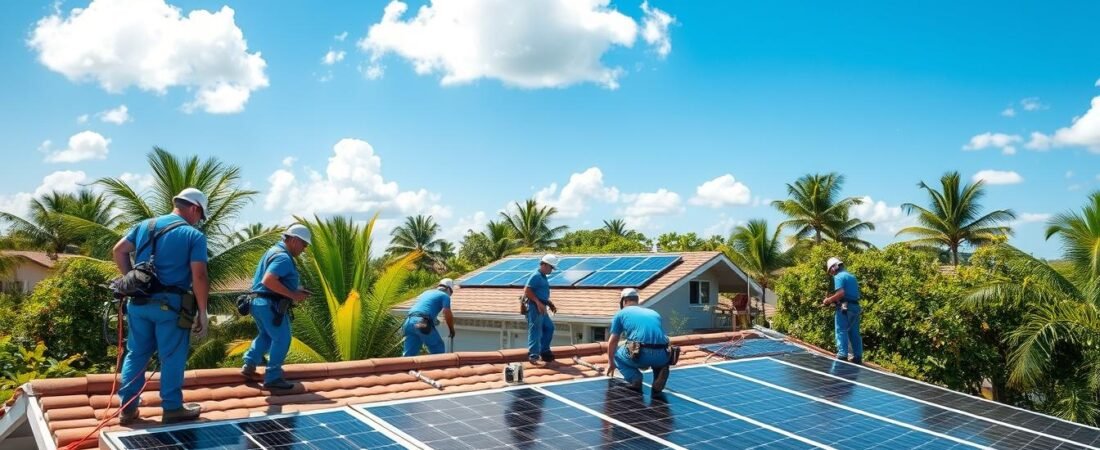
Ready to cut monthly utility costs and boost your home’s value? Our short guide helps homeowners find trusted local experts who design systems built to last. We analyzed data from over 1,500 companies to deliver clear, unbiased recommendations.
Coral Terrace enjoys more than 237 sunny days a year, making it ideal for residents seeking cleaner energy and steady savings. Choosing the right partner ensures your system performs well and maximizes long-term returns.
This guide focuses on practical steps to compare offers, check warranties, and verify installer credentials. By following a few simple checks, you can confidently select a team that matches your home’s needs and budget.
Key takeaways: Find reliable local experts; expect clear cost and warranty info; leverage long sunny seasons for better returns.
Why Solar Energy is a Smart Choice for Coral Terrace Homes
Choosing a residential renewable setup often turns into a strong long-term financial win. The average homeowner here saves about $1,745 per year with solar panels. That adds up fast and improves your home’s resale appeal.
With 237 sunny days each year, your roof can produce consistent power. That reduces reliance on grid electricity and lowers monthly bills.
Locking in energy costs for years protects your household from rising utility rates. At the same time, generating clean energy supports a greener neighborhood.
- Annual savings: Average household saves $1,745 per year.
- Consistent output: 237 sunny days enable steady generation.
- Value boost: On-site generation tends to increase property value.
| Metric | Local Average | Benefit |
|---|---|---|
| Sunny Days / year | 237 | Reliable daily power production |
| Average Savings / year | $1,745 | Lower monthly bills and quick payback |
| Cost Stability | Locked for years | Protection from rate hikes |
Understanding the Benefits of Professional Solar Panel Installation Coral Terrace FL
Expert design and fitting help homeowners get the most from their investment over many years.
Long-term Energy Savings
Proper system design cuts costs. A professional approach optimizes tilt, direction, and wiring so the system produces more usable energy. Over 20 years, that can add up to roughly $21,000 in savings on electricity bills.
Correct placement reduces losses and lowers monthly bills. That steady drop in utility costs gives most homeowners a clear payback and better budget predictability.
Increased Property Value
High-quality panel installation raises resale appeal. Buyers value homes with efficient setups already in place. That can translate to faster sales and higher offers.
- Maximized output from a professional installation.
- Verified warranties and clean permits for buyer confidence.
- Long-term energy security for your household.
| Benefit | What to Expect | Impact |
|---|---|---|
| 20-year savings | ~$21,000 on electricity | Lower lifetime cost |
| Performance | Optimized array and wiring | Higher annual output |
| Resale value | Certified installation records | Stronger buyer interest |
How We Evaluated the Top Solar Companies
To identify dependable local providers, we ran a multi-step audit of national firms and their local track records.
Our team analyzed over 1,500 solar companies across the nation to find reliable installers serving the Coral Terrace community today.
- Customer reviews and real feedback were weighted heavily to confirm consistent, high-quality service and trust.
- We checked each company’s years of experience to ensure technical depth for complex projects.
- Transparent information on pricing and service standards helps you compare offers without hidden fees.
- Vetting removed unreliable firms so you can focus on vetted installers with strong records.
- Final selections balanced verified reviews, proven processes, and clear customer support.
Result: a short list of companies that meet strict criteria for performance, pricing, and customer service—so you can pick local installers with confidence.
Top Rated Local Solar Installers
Finding a trustworthy installer starts with clear pricing and real customer feedback. Local firms that combine strong service records with transparent offers make the selection process far easier.
Top Local Picks
Smart Planet Solar leads our list with a 5.0-star rating from our research team. Other top companies were chosen for steady performance, strong warranty terms, and clear pricing. Use side-by-side information to compare experience, reviews, and quoted costs before you decide.
Customer Service Standards
Choose installers who respond quickly, provide written timelines, and answer follow-up questions. Good customer service reduces delays and helps homeowners feel confident through permitting and setup.
Warranty Coverage
Industry standard warranties run 25 years for product and performance. Look for providers that also include workmanship coverage so repairs or adjustments are covered. These guarantees protect long-term power output and value.
- Tip: Compare warranty length and what each one covers.
- Tip: Check customer reviews for real-world warranty support.
For a concise list of the best companies in the area, see our recommended providers and detailed reviews at best companies in the area.
Residential Versus Commercial Solar Solutions
Residential and commercial setups require different design choices to meet distinct energy needs. Local solar companies offer tailored energy solutions for single-family homes and larger properties alike.
For homeowners, a compact system focuses on long-term savings and energy independence. These designs prioritize predictable monthly bills and easy maintenance.
Businesses often need bigger arrays to offset heavy daytime power use. Commercial systems aim to stabilize operating costs and support higher load demands year-round.
“Choosing the right system means matching size and usage — a good design keeps costs down and performance up.”
Professional companies handle site assessment, panel selection, and safe installation so each client gets a system sized for real needs.
| Property Type | Typical Scale | Main Benefit |
|---|---|---|
| Residential | Small to medium | Lower bills, home autonomy |
| Commercial | Medium to large | Cost stability, higher offset |
| Mixed-use | Custom | Flexible, optimized design |
For vetted local help, contact our local energy experts to compare systems and get a clear estimate.
Financial Incentives and Tax Credits
Federal and state programs can cut your upfront costs and shorten payback timelines for home clean-energy upgrades. These options make projects more affordable for many homeowners and boost long‑term returns.
Federal Tax Credit Opportunities
The 30% Investment Tax Credit (ITC) remains the most impactful incentive for reducing the initial price of a new system.
- Reduced cost: The 30% ITC lowers federal tax liability dollar-for-dollar.
- Local help: Many companies assist clients in claiming state and utility rebates to lower total investment.
- Faster payback: Combining federal and state incentives shortens the time it takes to recoup costs.
- Guided process: Our research shows companies that guide homeowners through incentives are often the most valuable partners.
Ask prospective firms for a breakdown of available rebates and credits. That clarity helps you compare offers and pick the best financial path for your project.
Environmental Impact of Switching to Solar
A home shift to renewable power offers clear environmental perks that add up each year. Choosing solar energy can cut typical household emissions by about 90 pounds of CO2 per year, a measurable step toward cleaner air.
Manufacturing solar panels does use energy up front, but systems usually repay that cost within 1 to 4 years. After that, the net benefit is large and ongoing.
By relying less on nonrenewable sources, homeowners reduce fossil fuel demand and lower local pollution. Over many years, each home contributes to fewer harmful emissions released into the atmosphere.
“Making the switch is a proactive step toward preserving the planet.”
In short: adopting rooftop generation delivers long-term environmental wins. It helps protect public health and locks in cleaner, more resilient power for your household for years to come.
Factors Influencing Your Solar Installation Costs
Costs for a home energy upgrade vary widely based on a few predictable site and usage factors. Understanding these lets you compare pricing and get a clearer quote from an installer.
Roof Sunlight Exposure
Roof orientation and shading directly affect expected output. A site visit will show how much direct sunlight hits your roof on an average day.
That assessment tells the installer how many panels you need to reach your goals and whether special mounting is required.
System Size Requirements
Your current electricity bills guide the ideal system size. Higher monthly use means a larger array and higher upfront pricing.
Available incentives can lower the net cost. A qualified installer will factor rebates, permits, and labor into a written quote so you see the full scope before you sign.
- Tip: Ask for a breakdown of pricing, expected output, and payback time.
- Tip: Confirm warranty and workmanship coverage in writing.
What to Look for in a Solar Installer
A reliable installer makes the difference between steady savings and avoidable headaches.
First, verify licensing and local experience. Ask for proof of contractor credentials and recent project photos.
Look for companies that give clear pricing and full information about timelines and workmanship. Transparent quotes show they value their customers.
- Read customer reviews to learn how installers handle problems and follow through.
- Choose firms offering a free consultation so you can compare offers without pressure.
- Pick an installer that prioritizes your needs and explains long‑term care and warranty steps.
| Check | Why it matters | What to ask |
|---|---|---|
| Licensing & experience | Safety and code compliance | License number; recent jobs |
| Transparent pricing | Prevents surprises | Itemized quote; permit fees |
| Customer reviews | Real service record | References; online ratings |
Preparing Your Home for Solar Energy
Start with paperwork and a roof check so the work flows smoothly from day one.
Permitting typically takes 4–8 weeks from the initial contract to final activation. This timetable covers municipal approvals, utility interconnection, and any required inspections.
Once permits are in hand, most residential panel installation work finishes in 1–3 days. Crews mount racks, secure the panels, and connect the inverter and wiring.
Homeowners should confirm the roof is sound before crews arrive. Replacing shingles or repairing flashing first prevents future roof work that could disturb the system.
What the crew will handle
- All permit forms and local code paperwork.
- Equipment placement and safe electrical connections.
- Final inspections and utility sign‑off for activation.
| Step | Typical Time | Homeowner Action |
|---|---|---|
| Permitting & approvals | 4–8 weeks | Sign contract; provide access to property |
| Onsite work | 1–3 days | Keep area clear; confirm schedule |
| Final checks & activation | 1–2 weeks | Attend inspection; review warranty papers |
Plan ahead and communicate with your installer to avoid delays. Good prep helps your home start generating clean energy as soon as possible.
Conclusion
Make a confident choice to lock in long-term savings and reliable power. Picking among the best solar companies helps homeowners find systems that deliver real value over the years.
Use available incentives and rebates to lower upfront costs. Professional solar installers design efficient energy solutions tailored to your home’s needs.
Review clear information, compare customer reviews, and prioritize service and warranties. That will help you select a trusted company and avoid surprises.
Ready to get started? Learn more about about our installers and request a free quote to discover your potential savings this year.