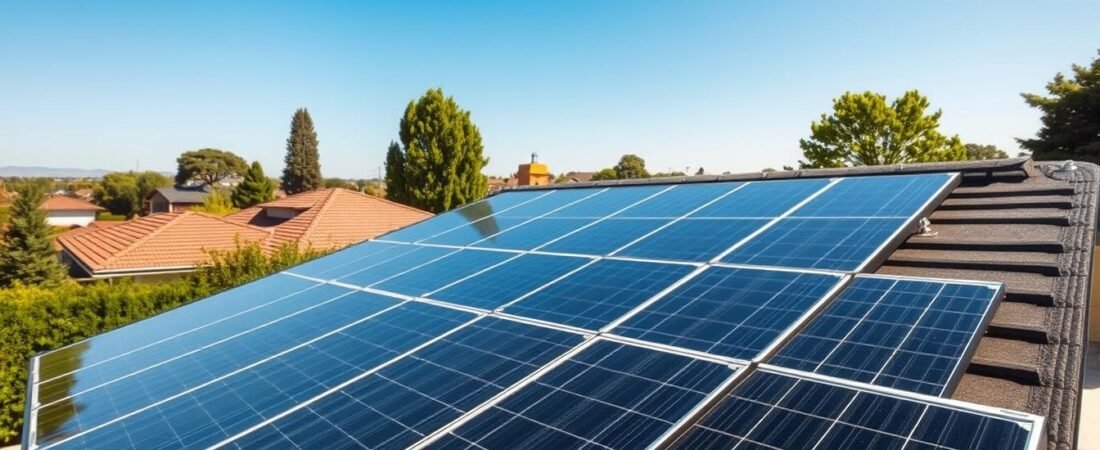
Thinking about switching your home to clean energy? Understanding the average cost helps you decide if a rooftop system makes sense for your budget and goals.
EnergySage reports a standard 12kW system runs about $30,505 before incentives. That upfront price includes equipment, labor, and related fees.
Many homeowners worry the initial investment is high. Yet most see major savings over time — commonly between $37,000 and $154,000 across 25 years. Generating your own electricity shields you from rising utility bills.
The total system cost depends on several factors: the equipment you choose, roof size and tilt, installer rates, and available tax credit or local incentives. In 2026, prices are among the lowest in recent years, making now a strong time to evaluate panels as a long-term investment.
Understanding the Typical Solar Panel Installation Cost
A quick way to gauge what a residential array will cost is to multiply system watts by the current per-watt rate. Today, many installers use an average of $2.58 per watt before incentives, a useful baseline for homeowners.
That per-watt figure helps you convert system size into a rough price. But a sticker number tells only part of the story. Long-term savings from reduced electricity bills and lower maintenance make a big difference over the years.
Key factors that change panels cost include equipment quality, roof complexity, and the installer you choose. Federal tax credit and local incentives can cut the net investment substantially, so review all available offers.
- Per-watt average: $2.58 before incentives
- System size affects per-watt pricing
- Get multiple quotes to compare equipment and labor
| Metric | Typical Value | Why it matters |
|---|---|---|
| Price per watt | $2.58 | Quick estimator for total system price |
| Federal tax credit | Reduces net investment | Lowers payback time and increases savings |
| System lifetime (years) | 25+ | Generates long-term electricity and savings |
Current Market Trends for Residential Solar
State pricing and equipment choices are shaping what homeowners pay today. In warmer states like Arizona, averages trend lower. In parts of the Midwest, such as Nebraska and South Dakota, per-unit prices run higher.
System size matters. Larger arrays often deliver a lower price per watt, so a bigger project can reduce the unit expense much like bulk buying. Panel efficiency also affects the total system size you need to meet household power needs.
System Size Impacts
Choose the right size based on your roof, sunlight exposure, and electricity use. Good orientation and high local irradiance lower the required array size and improve long-term savings.
Price Per Watt Trends
Comparing price per watt helps when you get multiple quotes. Look past the headline number and check equipment quality, installer reputation, and available tax incentives to judge value.
| Factor | Trend | Why it matters |
|---|---|---|
| System size | Higher size → lower unit price | Reduces average cost and often improves ROI |
| Regional pricing | AZ lower, NE/SD higher | Local markets shift final panels cost |
| Panel efficiency | Higher efficiency → smaller system | Lowers equipment and maintenance needs over years |
Key Factors Influencing Your Total Investment
Your roof, tree cover, and electrical setup play an outsized role in the total amount you’ll invest.
Roof condition and orientation affect labor and how many panels you need. Complex roofs raise labor time and the final price. If the roof needs major work, plan that into your investment.
Removing trees to improve sun exposure can run between $300 and $1,500. Upgrading to a 200-amp electrical panel is common and helps your system interconnect safely.
“Site upgrades and proper equipment often pay off with better long-term savings.”
- System size is driven by household electricity use and sets most of the system cost.
- Roof complexity increases labor and may raise the price for installing solar panels.
- Check if you qualify for the federal tax credit and local incentives to lower the net amount.
- Work with a trusted installer to avoid surprise fees and ensure permits and interconnection go smoothly.
| Factor | Typical impact | Example |
|---|---|---|
| Tree removal | Moderate | $300–$1,500 |
| Electrical panel | High | 200-amp recommended |
| Roof work | Variable | Repairs or reinforcement |
Breaking Down Equipment and Hardware Expenses
A large slice of the sticker comes from the parts you see on the roof and the electronics behind them. Knowing what each piece does makes it easier to compare quotes and spot value.
Panel Types
Monocrystalline modules dominate residential choices because they deliver higher efficiency and a sleeker look. Panels account for roughly 12% of total system price, yet they set long-term energy output and aesthetic appeal.
Inverter Technology
Inverters convert DC to usable household electricity. Options include string inverters, microinverters, and power optimizers. Choosing the right inverter affects performance during shading and system lifetime.
Racking and Wiring
Racking secures modules to your roof and wiring links them to inverters and the meter. These parts are essential for safety and reliability.
“Hardware and electronics typically represent about 46% of the total system price when supply chain and taxes are included.”
- High-quality equipment often yields better long-term savings and lower maintenance.
- Soft costs like permitting and design are often bundled with hardware pricing.
- DOE initiatives like SolarApp+ aim to shorten permitting time and reduce fees.
| Component | Share of System Price | Why it matters |
|---|---|---|
| Panels (modules) | ~12% | Determines energy output and lifespan |
| Inverters & electronics | ~10–15% | Affects conversion efficiency and performance |
| Racking & wiring | ~8–12% | Ensures safety and long-term reliability |
| Soft costs (permits/design) | Included in hardware bundle | Can vary by jurisdiction; affects timeline |
The Role of Professional Installer Fees
Installer fees cover more than labor. They fund system design, permits, engineering and the project management that keeps a rooftop job on track.
Labor itself is a small slice. On average, crew wages amount to about 7% of total installer fees for a residential system. Still, experienced teams help prevent mistakes that raise long-term maintenance and repair bills.
Installer profit and overhead also matter. Typical profit margins run near 11% of the total installation cost. That includes sales, warranties, office staff, and marketing needed to support a reliable company.
- Choose an installer with strong reviews and verified projects on comparable roofs.
- Confirm they handle permits, interconnection paperwork, and local incentives or tax credit filings.
- Ask what warranty and ongoing maintenance are included to protect your investment and savings over the years.
| Fee Component | Approx. Share | What it covers |
|---|---|---|
| Labor | ~7% | Installation crew and on-site work |
| Installer profit & overhead | ~11% | Business costs, sales, warranty support |
| Permits & paperwork | Variable | Local approvals and utility interconnection |
Regional Variations in Solar Pricing
Where you live can change what you pay for a rooftop system more than equipment choice. Labor rates, permit fees, and local rules all shape final pricing.
Florida and Rhode Island show clear differences. Florida often sees lower prices thanks to high demand, abundant sun, and competitive installers. Rhode Island can be pricier because of higher permitting fees and smaller market scale.
Impact of Local Incentives
Local incentives matter. State rebates, performance-based payments, and utility programs can cut net expense for homeowners. Combine these with the federal tax credit and your payback drops substantially.
- Regional labor and permitting make costs vary by state.
- Check state rebates and local programs before signing a contract.
- Get multiple quotes from nearby installers who know local rules.
- Your system size and electricity needs affect how much you save.
| Region | Typical Influence | How incentives help |
|---|---|---|
| Florida | Lower labor, high competition | Rebates and net metering improve savings |
| Rhode Island | Higher permitting and labor | State incentives can offset higher base price |
| General rule | Costs vary with market size | Combine local incentives with federal tax credit for best value |
“Local programs often turn a higher sticker price into a smart long-term investment.”
Financial Strategies for Managing Upfront Costs
Choosing how to pay for a rooftop system can shape your long-term savings more than the hardware you pick.
Cash purchases remove interest and dealer fees, so they usually deliver the best lifetime value. Paying up front means you own the equipment, qualify directly for the federal tax credit, and keep all future electricity savings.
Loan and lease options make going green possible with little or no money down. Note that some solar loans include dealer fees that can add nearly 19.99% to the loan principal, which raises the total amount you repay.
- Loans: spread the system cost over years; monthly payments may be offset by lower bills.
- Leases/PPAs: low entry cost, but you may not claim the tax credit or own the equipment.
- Compare total payments, incentives, and effects on resale value before signing.
“Compare total cost of ownership across models to find the best fit for your budget and goals.”
| Option | Upfront outlay | Ownership & incentives |
|---|---|---|
| Cash | High | Own; claim tax credit; max savings |
| Loan | Low–Medium | Own; may face dealer fees; eligible for credit |
| Lease / PPA | Very low | No ownership; incentives usually to lessor |
For a clear next step, see how our team helps homeowners move to home solar and evaluate financing on our about page.
Long-Term Savings and Return on Investment
A residential array often pays for itself in about a decade when you account for lower monthly electric bills and available tax incentives.
After the average 10-year payback, the electricity your panels produce is essentially free for the remainder of the system’s life. That means 15+ years of reduced or zero power bills on a typical 25-year warranty window.
Achieving a positive return is the main goal for many homeowners. Calculate your break-even point by comparing upfront payments, any loan interest, and expected yearly savings from reduced utility rates.
Rising electricity prices make your investment more valuable over time. Each rate hike increases the real value of the clean energy your system produces.
“Proper maintenance keeps your system near peak output, maximizing savings across 25 years.”
- Positive ROI usually arrives near year 10 for average residential systems.
- Free electricity after payback boosts lifetime savings and helps hedge future rate increases.
- Well-kept equipment and correct sizing extend value and protect resale appeal.
For an estimate of long-term benefits and to see how much solar panels save in typical households, run your numbers with a reputable calculator before you decide.
Maintenance and Ongoing System Care
Routine care keeps a rooftop system producing near peak output for many years.
Common Repair Costs
Most panels are low-maintenance, but you should budget for occasional work. Professional cleaning runs from $150 to $300 per visit and helps maintain output in dusty areas.
Inverters often need replacement every 10 to 13 years. Wiring or roof fixes can add to expenses, so check warranty terms and what your installer covers.
- Keep a monitoring app: it alerts you to drops in electricity or power production fast.
- Review warranties: manufacturers and installers may cover equipment and labor.
- Service packages: many installers offer plans that simplify routine maintenance and repairs.
| Service | Typical timeline | Estimated expense |
|---|---|---|
| Cleaning | Annually or as needed | $150–$300 |
| Inverter replacement | 10–13 years | Varies by model |
| Wiring/repairs | As issues arise | Minor to moderate |
“Staying proactive with maintenance helps avoid larger repairs and keeps long-term savings on track.”
If you are installing solar panels or evaluating panel installation options, plan for these maintenance items when you calculate solar panel installation and solar panel costs. Proper upkeep protects your equipment and preserves home value for years.
Evaluating Your Home for Solar Readiness
Start by checking your roof’s age, slope, and any spots that cast shade before you request quotes. A healthy roof with good orientation makes the project simpler and reduces unexpected work.
Confirm your electrical setup. Many homes need a 200-amp service for smooth integration. Upgrading the breaker box ahead of time avoids delays and extra fees during the solar panel installation.
Measure daily sun exposure. Shade from trees or nearby buildings cuts output and may change the system size you need to meet electricity goals. Trimming or removal can improve long-term savings.
- Check roof condition and orientation.
- Verify 200-amp panel or plan an upgrade.
- Assess shading and average daily sun.
- Estimate household electricity to size the system.
- Schedule a professional site assessment—costs vary by property.
“A site visit is the best way to get an accurate price and to spot hidden issues before work begins.”
| Readiness Item | Why it Matters | Next Step |
|---|---|---|
| Roof health & orientation | Affects output and labor | Repair or reinforce before work |
| Electrical panel | 200-amp often required | Plan upgrade if under 200A |
| Shade & sunlight | Directly reduces production | Trim trees or relocate arrays |
| Household electricity use | Sets system size and price | Provide bills to installer |
Conclusion
Today’s market makes it easier for homeowners to access clean power and lock in future electricity savings.
Understanding the average cost and the role of the federal tax credit helps you compare offers and spot real value. Evaluate the system size you need, local incentives, and how much electricity you want to offset.
Whether you pay cash or use financing, get multiple quotes from trusted installers to compare price, warranties, and service. Doing so improves your chances of strong long-term savings and a system that fits your home.
Take time to assess your roof, bills, and goals. With the right information, adding panels in 2026 can be a smart step toward lower electricity bills and greater energy independence.