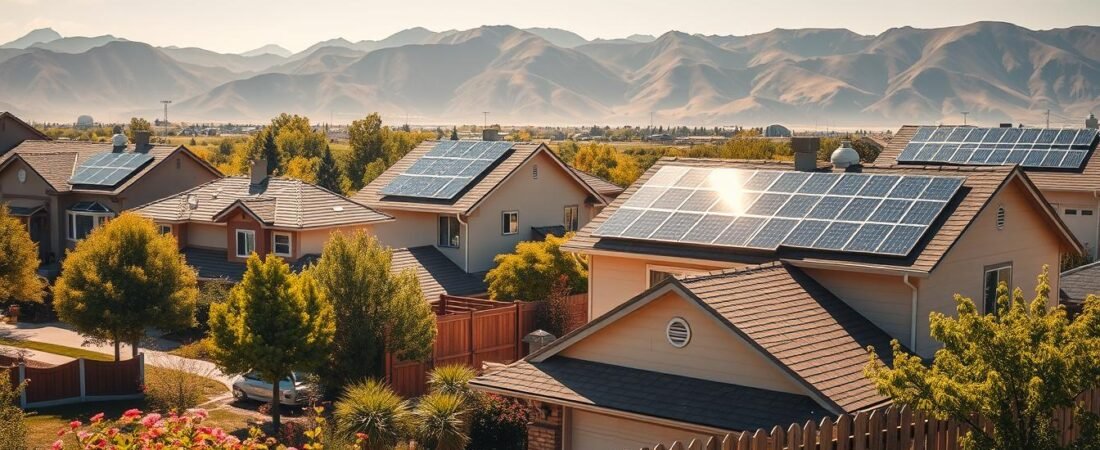
As of April 2026, the average solar panel cost orem residents face is $2.66 per watt, installed. A typical system in the area runs about 12.21 kW, which helps homeowners estimate price and potential savings.
Rising utility bills make switching to a home energy system a smart move for many families. Locking in predictable power rates can protect you from future price hikes and reduce monthly bills.
When sizing a system, consider roof orientation, installation needs, and the watt output you require. Comparing quotes from multiple installers helps you find the best price and financing options.
Many homeowners see a better return after applying the federal tax credit and local incentives or rebates. Reviewing incentives and loan choices can make the investment more affordable over the years.
Understanding the Solar Landscape in Orem
The local market mixes well-known brands and long-running installers. SunPower Inc., founded in 2014, holds Elite+ installer status in Orem and focuses on high-performance solutions. Intermountain Wind & Solar, operating since 2008 from Centerville, brings years of field experience to nearby homeowners.
These companies help design a system that fits roof angles and seasonal sun patterns. Professional crews inspect your roof and estimate energy needs before any installation. That ensures the panels you get match your home and usage.
- Experienced teams: reliable workmanship and warranties.
- Local know-how: designs tuned to Utah’s seasons for better power output.
- Growing demand: more residents choose a system to reduce grid dependence.
“Choosing an installer who knows local weather and codes makes a big difference.”
Current Solar Panel Cost Orem Estimates
Understanding current market figures gives you a clearer picture of what to expect for a system.
Average Market Pricing
The typical 12.21 kW system in this area averages $32,543 before any incentives or tax adjustments.
This figure reflects common equipment and standard installation complexity for a home sized to match local usage patterns.
Price Ranges Explained
Actual prices vary. Most bids for a 12.21 kW setup fall between $27,662 and $37,424.
Differences come from equipment tier, roof work, and local tax rules. These factors influence total installation costs and final panel cost per watt.
- Average estimate: $32,543 for a 12.21 kW system.
- Typical range: $27,662 – $37,424 depending on equipment and labor.
- Request multiple quotes to compare price and warranty terms.
| Metric | Typical Value | Low-End | High-End |
|---|---|---|---|
| System size | 12.21 kW | 12.21 kW | 12.21 kW |
| Average price | $32,543 | $27,662 | $37,424 |
| Key drivers | Equipment tier, roof work | Basic equipment | Premium equipment, complex install |
| Notes | Before incentives | Lower upfront price | Higher warranty/efficiency |
“Getting several quotes and checking local incentives helps homeowners plan and save.”
How System Size Impacts Your Total Investment
Choosing the right system size directly shapes your upfront investment and future savings.
Calculating Your Needs
A 5 kW setup in Orem costs about $13,324. Doubling size to 10 kW will roughly double the total price, since equipment is priced by the watt.
Assess your roof area and review past electricity use to pick an efficient size for your home. Larger systems deliver more energy but need more roof space and a higher initial outlay.
- Per-watt pricing: panels and labor are billed by watt, so size drives totals.
- Space vs. output: confirm roof fit before choosing a bigger system.
- Compare quotes: multiple bids reveal the best value and financing options.
| System Size | Typical Price | Why it Varies |
|---|---|---|
| 5 kW | $13,324 | Standard equipment, typical roof |
| 10 kW | ≈$26,648 | More modules, higher labor |
| Per-watt | $2.66 / watt (local avg) | Depends on equipment tier and install |
“Carefully sizing your system and comparing local quotes helps you match performance to budget.”
For more details on panel pricing in the area, see this panel price guide.
Exploring Financing Options for Your Home
You don’t need all cash to bring clean energy to your home—there are several financing paths. Many providers offer $0-down loan options so you can start saving on electricity bills right away.
Choosing a loan spreads installation payments over years. That lowers your upfront burden but may change long-term savings because of interest.
Leases and power purchase agreements (PPAs) let homeowners get immediate energy benefits without owning the system. These plans often reduce your monthly utility bill, though ownership perks like tax credits go to the provider.
- If you lack cash, look for $0-down loan options to begin saving now.
- Loans spread payments but check interest to estimate total cost over time.
- Leases and PPAs give quick savings without a big upfront payment for the home.
- Verify your installer or lender offers the specific financing options that fit your budget and power needs.
“Pick the plan that matches your finances and goals — the right loan or lease makes the transition easier.”
Navigating Local Incentives and Rebates
Stacking available rebates with the federal credit can significantly lower the price of a residential system. The federal tax credit covers 30% of qualified installation expenses, which is a major saving when planning your purchase.
Many Utah homeowners qualify for extra local incentives and rebates that reduce the net price further. Check utility programs, state offers, and occasional municipal rebates that target cleaner power and energy upgrades.
Talk with your installer about how the federal tax credit and local rebates apply to your specific system and home. Installers often help with paperwork and can point to lesser-known programs that cut upfront costs.
- Use the 30% federal tax credit to improve return on investment.
- Search local incentives and rebates to lower upfront price and ongoing costs.
- Confirm eligibility and filing steps with your provider before signing contracts.
“Maximizing incentives ensures your system delivers the greatest possible savings over its lifetime.”
Selecting the Right Solar Installer
Picking the right installer shapes how well your system performs and how long it lasts.
Vetting local contractors means checking licenses, warranty terms, and real customer reviews. Ask for proof of insurance and recent project photos. Confirm they size the system to match your roof and average energy use.
Vetting Local Contractors
Meet installers and request a written site assessment. A pro will note roof condition, possible battery additions, and permit needs. That helps avoid surprises and saves time and money later.
Comparing Multiple Quotes
Get at least three detailed quotes. Compare equipment, warranty length, and financing options like a loan. Side‑by‑side comparisons reveal the best price and long-term savings.
Why Marketplace Tools Help
Using a marketplace like EnergySage — funded by the Department of Energy’s SunShot Prize — speeds comparisons and vetting. Buyers on the platform often see prices up to 20% lower by reviewing multiple quotes from vetted installers.
| Step | What to Check | Why it Matters | Expected Outcome |
|---|---|---|---|
| License & Insurance | State license, liability | Protects against damage | Safer installation |
| Detailed Quote | Equipment, labor, warranty | Avoids hidden fees | Clear price comparison |
| Marketplace Use | Multiple vetted bids | Better prices, vetted teams | Up to 20% savings |
| Site Assessment | Roof, size, battery options | Right system size & upgrades | Higher performance over years |
“Take time to compare quotes and vet installers — it pays off in reliable power and long-term savings.”
Evaluating the Impact on Property Taxes
Installing a generation system often raises a home’s market value, which can trigger higher property taxes.
In Utah, these installations are not tax exempt. That means the added value may increase your annual property tax bill.
This potential change should be part of your long-term financial planning for the investment. Factor higher annual taxes into payback estimates and loan choices.
Even if taxes rise, the energy savings over the system’s life often offset the extra expense. Run simple projections that include expected savings, maintenance, and the likely tax adjustment.
- Utah does not currently exempt these home upgrades from property tax.
- Higher assessed value can raise yearly tax obligations.
- Energy savings usually outweigh the additional tax over time.
“Talk with a local tax professional to understand how an installation may influence your property tax assessment.”
For pricing context that helps with your financial model, see the panel price guide.
Long Term Savings and Energy Independence
Locking in stable electricity rates can shield homeowners from unpredictable utility hikes.
Over time, a well-sized system reduces monthly bills and gives predictable energy costs. Many homeowners see between $1,466 and $3,666 in yearly savings. Those figures help make the installation an attractive long-term investment.
Predictable Energy Costs
Even in winter months, panels keep producing power, though output is lower. Pairing a battery with your system boosts reliability and can cover evening usage.
- Stable bills: lock in lower electricity spending for years.
- Yearly savings: many homeowners cut their bills by $1,466–$3,666 annually.
- Battery option: adds backup power and increases independence.
| Benefit | What It Means | Typical Impact | Action |
|---|---|---|---|
| Predictable bills | Fixed low energy outlay | Less exposure to utility hikes | Request multiple quotes |
| Annual savings | Lower electricity spend | $1,466–$3,666 | Compare system size and price |
| Year-round power | Generation in winter months | Reduced reliance on grid | Consider battery pairing |
| Value & incentives | Home investment plus credits | Improved resale appeal & tax credit | Check available incentives |
“Requesting a detailed quote and comparing options is the first step toward lasting electricity savings.”
Conclusion
A clear plan—right system size, incentives, and a vetted installer—delivers steady electricity savings for your home. Thoughtful choices help the initial investment pay off while lowering monthly bills.
Compare multiple quotes, factor in the federal tax credit, and weigh property tax or permit effects so you know the true cost over time. These steps improve long‑term savings and performance.
Ready to take the next step? Learn more about our team and start finding the right installation and system to power your home for years to come.