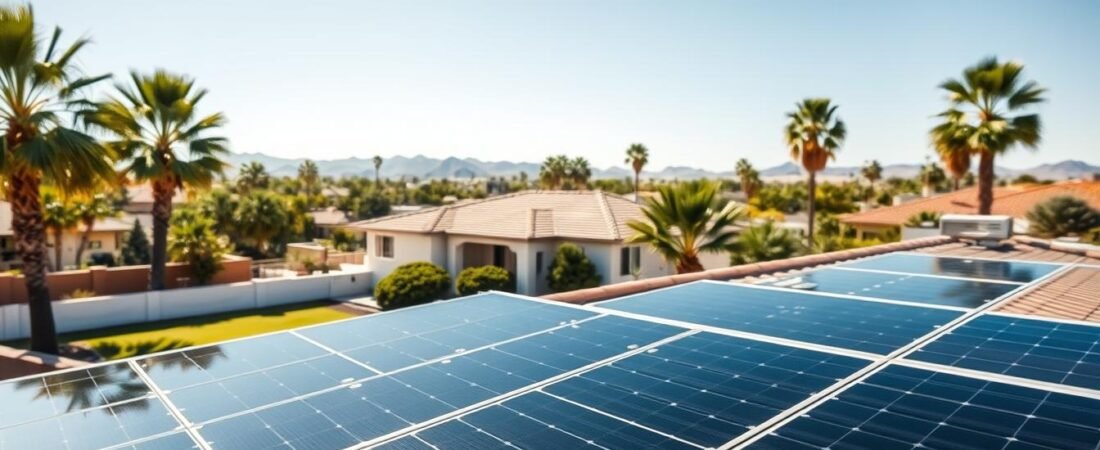
Welcome to a local service directory that helps Glendale homeowners connect with trusted companies and request multiple quotes in one place. This page aims to make comparing pricing, equipment, warranties, and service simple so you can pick what fits your home and budget.
Glendale averages 300+ days of sunshine a year, so now is a practical time to explore clean energy options. Use that advantage to shop smart, verify installer credentials, and weigh long-term value rather than chasing a single brand.
You will find a clear timeline for a typical installation, tips for vetting teams, guidance on comparing quotes, and a breakdown of incentives that can lower costs. Modern systems commonly include high-efficiency panels, an inverter, and optional battery backup; each choice affects lifetime savings.
Compare multiple offers to improve value, avoid hidden fees, and gain confidence in long-term support. Our goal is to help you make an informed decision that fits your home and budget.
Find Trusted Solar Installers in Glendale, AZ and Compare Multiple Quotes
Cut through confusing offers by asking for side-by-side proposals from trusted firms. This simple step saves time and helps you spot gaps in pricing, equipment, and warranties.
Who this directory helps
This guide is for homeowners who want clean energy but dislike calling five companies or facing high-pressure sales. Use the directory to get clear quotes without guesswork.
What you’ll get by comparing
Comparing proposals brings more transparent pricing, clearer equipment lists, and fewer surprises on financing and warranties.
- Trusted means proper licensing, insurance, and verified reviews.
- Side-by-side details: system size, estimated production, brands, warranty, and total price.
- Savings come from long-term value, honest production estimates, and reliable support—not just the cheapest bid.
| What to Compare | Why it Matters | Red Flag |
|---|---|---|
| System size & production | Matches energy needs | Vague production estimates |
| Equipment brands & warranties | Predicts reliability | No labor warranty |
| Price & financing | Impacts payback | Hidden fees |
Use our shortlisting framework — reputation, transparency, fair pricing, and local service — to pick the best companies. For curated options, see best solar companies.
Why Glendale Homeowners Are Going Solar Now
With more than 300 bright days each year, many homeowners see steadier on-site power production than in cloudier climates.
Consistent sun increases the chance that systems produce useful energy across seasons. That improves the case for lower monthly electricity costs and clearer long-term savings.
How sunlight translates to real output
- More sunny days generally boosts annual production and smooths monthly output.
- Still, direction, shading, and system size change results. Accurate modeling matters when comparing offers.
- Energy export rules and your past usage shape actual reductions in utility bills, so use real data—not averages.
What homeowners want
Most people aim to cut electricity bills and lock in predictable savings as rates rise. Others value resilience and brief backup power when paired with batteries.
“Compare proposals carefully and ground savings projections in your own usage to avoid surprises.”
| Factor | Why it matters | Checklist |
|---|---|---|
| Sunlight days | Drives annual production | Confirm local irradiance data |
| Roof & shading | Affects real output | Request site modeling |
| Rates & export rules | Determines bill savings | Check utility buyback rates |
Residential Solar Panel Installation Glendale AZ: What to Expect From Start to Power On
A clear timeline explains why good projects can take several weeks from contract to grid connection.
Compare quotes and sign a contract with a solar company
Ask that quotes list equipment, total price, payment schedule, estimated timeline, and warranty terms. Get in writing who handles permits and interconnection paperwork.
Site visit at your home or a virtual assessment
The installer checks roof condition, shading, and electrical panel capacity. This step confirms layout and final production estimates.
Permits, utility documents, and ordering equipment
Once designs are approved, companies file permits and order gear. Permit review and utility sign-off can add time to the process.
Solar panel installation day: racking, wiring, panels, and inverters
Crews mount racking, run wiring, install panels and inverters, then perform safety checks. Typical on-roof work takes 1–3 days.
Town inspection and approval for interconnection
After inspection, the utility grants approval to export power. Only then can you turn the system on and send energy to the grid.
| Phase | Typical time | What happens | Homeowner role |
|---|---|---|---|
| Quote & Contract | 1–2 weeks | Design, pricing, sign agreement | Review scope, ask questions |
| Site Visit | 1 day | Roof, shading, electrical check | Provide access or photos |
| Permits & Orders | 2–6 weeks | Permits filed, equipment ordered | Approve final design |
| Install & Inspection | 1–3 days + inspection | Racking, wiring, panels, testing | Schedule inspection, final sign-off |
How This Directory Helps You Choose the Best Solar Company
Search fatigue ends here: this directory points homeowners to local companies that actively serve your area and show current availability.
Why local service matters: nearby teams handle follow-ups, warranty work, monitoring, and future add-ons like battery backup or EV charging faster and with less hassle.
Matching you with vetted local options
The directory gathers consistent information — equipment lists, warranty terms, production estimates, and pricing — so you can compare offers fairly.
It highlights companies with real scheduling windows, verified reviews, and clear scopes of work. That reduces calls and wasted meetings.
Pick a durable solution, not just the cheapest bid
The best solar choice blends craftsmanship, transparent pricing, and dependable service. Use the tool to examine different systems and solutions, from simple panel-only setups to storage-ready or full battery backup designs.
- Compare equipment, warranties, and projected production side-by-side.
- Shortlist at least three installers to spot outliers in price and claims.
- Look for teams with local experience and clear post-sale support.
For curated options and to request multiple bids in one place, visit our installer directory and start shortlisting today.
What to Look for in Glendale Solar Installers Before You Sign
Choose installers who can support your system for decades, not just the first year. A rooftop energy system lasts 25+ years, so pick a company with staying power and clear accountability.
Years in business and real experience
Many experts suggest a practical benchmark: prefer companies that have been operating at least five years. Longer tenure raises the chance they’ll honor warranties and provide service far into the system’s life.
Licenses, insurance, and certifications
Verify state licensing and general liability insurance. Look for NABCEP-certified technicians as a sign of installer quality and proper training.
Services and product range
Confirm the installer offers the products you need: panels, inverters, battery storage, and EV charging. Ask who performs the work—an in-house crew or subcontractors—and get that in writing.
Reading customer reviews critically
Check patterns across platforms. Focus on how companies resolve issues, response time, and recurring praise or complaints. Be wary of reviews that are all one-tone praise with no detail.
Warranty and workmanship expectations
Target at least a ten-year labor warranty. Ask what the warranty covers, how claims are processed, and whether parts and labor are included. Get warranty terms in the contract.
“Longevity, proper credentials, and clear warranties separate reliable companies from risky offers.”
| What to Verify | Why it Matters | Quick Check |
|---|---|---|
| Years in business | Service continuity over decades | 5+ years recommended |
| Licenses & insurance | Reduces liability and risk | Request copies before signing |
| Warranties | Protects workmanship and repair costs | 10+ year labor warranty |
Comparing Solar Panel Installation Quotes in Glendale
Begin by confirming each proposal models the same roof layout, shading, and expected annual output. That alignment makes it easier to compare projected production and long-term savings.
System size and projected energy production estimates
Every quote should list system size in kW and projected annual energy in kWh. Ask how the installer calculated production and whether they used shade analysis or satellite modeling.
Pricing basics: total cost vs. price per watt
Compare the total cost and the price per watt side-by-side. Price per watt helps spot outliers, while total cost shows your net outlay after incentives.
Local cost benchmarks
In this market many bids fall near $2.11–$3.17 per watt. Quotes far below that range can be a red flag; verify equipment and workmanship before assuming a deep discount is safe.
Financing details to verify
Request both a cash quote and a financed quote. Confirm any dealer fees—these can add 20% or more to the financed cost. Get the APR, term, and total paid over time in writing.
Lease or PPA contracts
For leases or PPAs, check escalator clauses. A ~3% annual escalator is common; compare that to expected utility inflation so payments remain competitive over the contract term.
Payback period and sanity checks
Sanity-check payback by dividing net system cost by projected annual bill reductions. If projected savings look unusually high, ask for the usage data and the production model behind the claim.
| What to confirm | Why it matters | Quick check |
|---|---|---|
| System size (kW) | Matches your usage | Compare across quotes |
| Projected production (kWh) | Drives savings estimates | Ask for modeling method |
| Total cost & $/W | Shows value and outliers | Use $2.11–$3.17/W benchmark |
Solar Financing Options for Glendale Homeowners
Choosing how to pay for a home energy system shapes long-term savings and monthly cash flow.
Common ways to pay
- Cash purchase — highest upfront cost, lowest total paid and full access to incentives.
- Loan — spreads cost, may include dealer fees; compare cash vs financed quotes.
- Lease — low or no down payment, but you don’t own the system and incentives go to the company.
- PPA — pay for energy produced; watch escalator clauses that raise payments over time.
How choice affects math
Financing changes monthly payment, total cost, and years to reach net savings. Loans raise monthly cash needs but can keep ownership benefits. Leases/PPA often lower short-term bills but increase long-term expense.
| Option | Monthly impact | Total cost | Ownership |
|---|---|---|---|
| Cash | High upfront, none later | Lowest | Owner |
| Loan | Moderate monthly | Moderate (watch fees) | Owner |
| Lease/PPA | Low monthly | Higher over term | Company |
Ask each company for both cash and financed quotes and a full payment schedule. For more step-by-step how to pay for my solar guidance, request written assumptions so you can compare offers without guesswork.
“Compare formats and read escalators; small time spent now saves money later.”
Solar Incentives and Rebates Available in Glendale, AZ
A clear view of available rebates and credits helps you compare true net costs from each company.
Major programs commonly used by homeowners here can cut upfront cost and improve long-term savings. Eligibility depends on program rules and your tax situation, so verify limits before assuming amounts.
Key incentives to check
- Federal Residential Clean Energy Tax Credit — 30%: Reduces your federal tax bill for eligible systems and often yields the largest headline savings.
- Arizona net billing: Exports to the grid may be credited below full retail, which affects monthly bills and payback math.
- Sales tax exemption: Qualifying equipment can be exempt at purchase, lowering initial outlay.
- Property tax exemption: Adds long-term value by preventing added assessed value from raising local property taxes.
- Arizona state tax credit: A state-level credit may apply; confirm current caps and rules.
Practical tip: Ask each installer to show incentives line-by-line on the quote so you can compare net cost and estimated bill reductions across bids.
| Incentive | What it does | Typical impact | What to ask |
|---|---|---|---|
| Federal 30% credit | Reduces federal taxes | Largest one-time saving | Is my system eligible? |
| Net billing | Credits exported power | Affects monthly bills | How is export valued? |
| Sales tax exemption | Removes purchase tax | Lowers upfront cost | Is equipment listed? |
| Property & state credits | Protects long-term costs | Ongoing and one-time savings | Any caps or limits? |
Solar Batteries and Backup Power for Glendale Homes
A growing number of homeowners add onsite storage to guard against outages and capture more value from midday production.
When a battery quote makes sense: choose storage if you want reliable backup power during outages or if exported electricity is credited below full retail.
Ask for specifics in any battery quote. Request usable capacity (kWh), continuous and peak output (kW), round-trip efficiency, and clear warranty terms. Confirm how the unit will integrate with your existing system and whether it supports critical-load circuits.
Local providers often highlight the Tesla Powerwall 3 as a common option. Compare that to other branded choices on total value—capacity, output, and long-term warranty coverage matter more than brand alone.
- Practical benefits: store midday production for evening use and reduce grid purchases.
- Confirm if the proposal includes electrical work, transfer switch, and backup panel wiring.
- Balance outage needs and financial goals; batteries add cost but can be high-quality solutions for resilience and better bill outcomes.
“A battery can shift how you use on-site generation—saving more for when you need it most.”
Solar Equipment Quality: Panels, Inverters, and Performance
Start by learning what modern modules and inverters typically deliver so you can compare offers clearly.
Common benchmarks to expect
Today many modules measure near 400W with about 19%+ efficiency. Higher-efficiency options exist, but they usually cost more.
Inverter choices in plain language
Microinverters attach behind each panel for better shade tolerance and per-module monitoring. Examples local providers mention include Enphase IQ8 microinverters.
String inverters, such as some Tesla models, group panels on one inverter. They cost less up front and work well on uniform roofs.
How equipment affects real performance
Shading tolerance: microinverters reduce the hit from a shaded module. Monitoring: microinverters give panel-level data; string inverters usually show system-level output.
Expandability: choose products that allow adding battery storage or extra modules without swapping core gear.
Understanding warranties and what to confirm
“25-year product and performance warranties” typically mean parts are covered and output won’t fall below a set level over time. Ask for written limits, failure clauses, and who handles labor.
- Ask for full spec sheets.
- Confirm heat and roof-match ratings.
- Make sure monitoring and expansion needs are clear.
“Good equipment choices make your system more reliable and easier to service.”
Permits, Inspections, and Interconnection in Glendale
Permitting and utility paperwork often set the real schedule, not the day crews spend on your roof. Understanding this helps you plan and avoid surprise delays.
What your installer typically files and coordinates
Most reputable installers submit permit applications, site plans, and electrical diagrams for you. They also file utility interconnection forms and follow up on required documents.
How the town inspection fits into go-live time
After crews finish, a town inspection must pass before the utility will allow grid connection. That inspection often determines the final approval window to turn on power.
- Checklist for homeowners: confirm who files permits, what fees are included, and how schedule updates come.
- Ask companies how they handle delays and busy-season timelines.
- A smooth go-live usually reflects strong back-office service, not just fast on-roof work.
| Task | Who handles it | Typical time |
|---|---|---|
| Permit application | Installer or design team | 2–6 weeks |
| Utility interconnection | Installer submits, utility approves | 1–4 weeks after inspection |
| Town inspection | Municipal inspector | Scheduled within days–2 weeks |
Local Coverage in and Near Glendale: Neighborhoods and Nearby Communities
Where you live matters. Installers commonly list Arrowhead Ranch, Historic Catlin Court, and Downtown Glendale as frequent service areas. Mentioning real neighborhoods helps you spot companies that know local roofs, rules, and aesthetic expectations.
Design for modern vs. historic homes
Historic homes often need low‑profile layouts to protect curb appeal and meet HOA or preservation rules. Modern homes may allow higher-output arrays and visible conduit runs tucked into architectural lines.
Ask installers for options that hide wiring, match roof color, or use rail-less racking to preserve appearance. Request photos of past work in similar neighborhoods to confirm style and workmanship.
Service reach across the Valley
Many reputable companies serving Glendale are based in nearby Phoenix and cover Scottsdale and other Valley cities. That wider reach can expand your shortlist while keeping local response times reasonable.
Confirm travel zones and response times before signing. Long-term service quality depends on timely visits for warranty work and monitoring support.
Quick local checklist
- Verify the installer has completed projects in Arrowhead Ranch, Historic Catlin Court, or Downtown Glendale.
- Ask for photos of similar homes to judge aesthetics and workmanship.
- Confirm who handles HOA approvals and neighborhood permit quirks.
- Check service radius and expected response time for maintenance or warranty calls.
How to Shortlist Companies Using Reputation, Transparency, and Service Standards
A practical shortlist focuses on companies that answer direct questions and back claims with documents you can check.
Traits expert rating systems prioritize
Require proof of license, insurance, and recent customer references. Favor firms with clear, line‑item quotes and no vague promises.
Questions to ask about design and crews
Ask: Who designs the system? Who pulls permits? Who will be on the roof installing it?
Follow up: request names, written timelines, and sample contracts showing labor and part warranties.
In-house vs. outsourced crews — why it matters
In-house crews usually offer faster scheduling, clearer accountability, and easier warranty service. Outsourced crews can work fine, but confirm who handles punch-list items and warranty fixes.
- Eliminate any company that won’t show license/insurance or provide a detailed quote.
- Prioritize transparency, responsible pricing, strong reviews, and true local service.
- Ask how customer service works after handoff: monitoring, response times, and a direct contact.
“The best outcome comes from an installer who proves competence and integrity in writing, not just promises in a pitch.”
Conclusion
Turn good sunshine into reliable savings by pairing accurate production estimates with a trustworthy company and clear paperwork.
Compare multiple, line‑item quotes and verify system size, projected performance, total cost, and financing before you sign. Confirm warranties and who handles future service so long-term value beats a low upfront price.
Remember: permits, inspection, and utility interconnection add time and matter for a smooth go‑live. Pick an installer that communicates timelines and follows through for customers.
Use our directory to request quotes from several companies, ask the right questions in this guide, and choose the offer that fits your home, budget, and goals. Prioritize service and performance as much as cost.