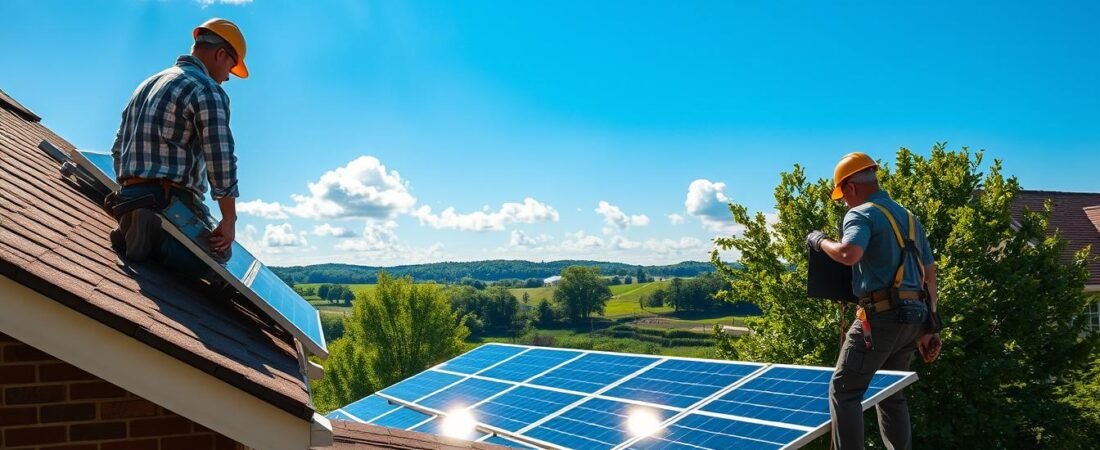
Planning a solar panel installation pennsylvania project starts with clear, local knowledge. You need to weigh rules, your home’s energy use, and roof capacity before you choose equipment.
As of 2025, top models can produce about 450 watts in full sun. That means a well-placed array can deliver strong, steady output for years.
Our guide walks you from the first site check to final grid hookup. We explain how to pick high-quality solar panels and the right gear to match your roof.
Expect clear steps, expert tips, and short checklists that make the process simple. With the right choices, you gain reliable power and long-term value.
Ready to learn what matters most? This introduction sets the stage for smart, confident decisions about your home’s energy future.
Understanding Solar Panel Installation Pennsylvania
Knowing what to expect over the first 25 years is key when homeowners consider a new system. A reliable company will back equipment and service for decades, giving customers confidence in long-term performance.
Many homeowners are going solar to tap local net metering rules and lower utility bills. When you compare companies pennsylvania, look for a proven track record of successful installations across the region.
The best installers focus on long-term relationships. They explain options for a solar panel system and whether adding a battery makes sense for backup power during outages.
Our guide helps you compare providers by flagging warranty terms, service plans, and customer reviews. That makes it easier to pick a company that matches your home energy goals and budget.
- Check warranty length: companies should support systems for at least 25 years.
- Verify experience: local installations show a company knows regional rules.
- Ask about batteries: they add resilience during grid interruptions.
Evaluating Solar Equipment Quality and Performance
Picking parts that match your roof layout and expected sunlight makes a big difference in annual power yield. Start by comparing rated output, real-world efficiency, and how modules behave as they age.
Efficiency and Power Output
Look for rated wattage and efficiency tests. Top 2025 models can deliver about 450 watts in full sun, which boosts household energy production without extra roof area.
Also check temperature and shading performance. A higher-efficiency product often produces more electricity per square foot on tight roofs.
Warranty and Longevity
Warranty length signals confidence. Premium manufacturers now offer 25 to 40-year coverage on key components. That protects you from defects and reduces future repair costs.
Factor warranty terms into price comparisons. A higher upfront cost can save money over the life of the system by cutting replacement risk.
- Match: make sure the equipment fits roof layout and orientation.
- Output: 450 W modules increase total yearly energy.
- Value: longer warranty often lowers lifetime cost.
| Feature | Typical Value (2025) | Why It Matters |
|---|---|---|
| Max rated power | Up to 450 W | More power per module saves roof space |
| Manufacturer warranty | 25–40 years | Protects investment and lowers lifetime cost |
| Efficiency under heat | Varies by model | Affects seasonal electricity output |
| Upfront price vs long-term cost | Higher price may pay off | Reduces maintenance and replacement spending |
For a detailed quote and equipment matching, visit recommended installers who can size a system to your roof and goals.
Selecting the Right Solar Installer for Your Home
Choosing the right installer begins with clear proof of experience and safety practices. Ask how the installer protects your roof when drilling and how they preserve structural integrity.
Request multiple quotes from reputable solar companies so you can compare price, timeline, and service terms. A side-by-side look makes it easy to spot added fees or weak warranties.
A reliable solar company will also explain financing and local incentives. They should show you state rebates, tax credits, and loan options that fit your home project.
Look for teams of experienced solar installers that commit to at least 25 years of support. That long-term service keeps systems working through routine wear and helps with warranty claims.
- Safety first: Verify the installer can handle roof penetrations without harm.
- Compare: get multiple quotes and check references.
- Support: confirm 25 years of customer service from the company.
- Fit: ensure the installers understand residential roof specifics.
Essential Factors for Choosing a Reputable Company
Start by vetting how long a firm has served homeowners and what credentials it holds. Short checks now save time and money later.
Years in Business
Make sure the company has been operating for at least five years. Firms with multi-year experience are more likely to honor long-term support and warranty claims.
Licenses and Insurance
Licensed installers in the state must be EAA-Certified in photovoltaics. This involves training hours and exams for electrical safety.
Ask for proof of certification, liability insurance, and worker coverage before you sign a contract.
Customer Review Scores
Check Google, Yelp, and industry sites for review scores. Real customers reveal how a company handles delays, price changes, and service calls.
- Must-do: request multiple quotes and compare system size, price, and warranty.
- Workmanship: expect a minimum 10-year workmanship warranty.
- Extras: ask if the company offers battery storage or EV chargers with equipment quotes.
Navigating Pennsylvania Solar Incentives and Rebates
A mix of federal credits and state rules can cut thousands from your purchase and future bills. The 30% federal residential clean energy tax credit applies when homeowners buy solar panels or add battery storage. That credit is a major savings driver.
State law requires utility companies to provide full-retail net metering. This means excess generation earns credit at the same retail rate, which lowers your monthly electricity bill and speeds payback.
“Use available incentives first; they often change each year, so check current program rules before you sign.”
- Federal tax credit can save homeowners thousands on a system cost.
- SREC and similar programs let you earn by sending clean energy back to the grid.
- A battery provides backup power but rarely reduces monthly bills in this state.
- Estimate how much solar energy your system will produce to maximize incentives and savings.
Tip: Compare offers from local companies and ask for estimated yearly output. That number helps you calculate real money saved and projected bill reduction.
How to Compare Solar Quotes Effectively
Start with clear criteria. Before you review numbers, list your must-haves: expected yearly energy, desired warranty length, and whether you want battery backup.
Get at least three quotes from different solar installers. Multiple bids reveal how each installer sized the system and priced labor and equipment.
Analyzing System Size and Energy Production
Compare the proposed system size and the projected electricity output. Ask each company why one proposal uses more panels than another — shading, roof angle, or conservative estimates can explain differences.
- Benchmark price per watt: the average ranges from $1.90 to $2.86 per watt; use this to spot outliers. See the average cost per watt in PA for details.
- Warranty matters: make sure a 25-year performance warranty is included to protect long-term electricity production.
- Compare totals: look at total price, price per watt, and estimated yearly savings to decide which offer gives the best value.
Understanding the Financial Impact of Solar Loans and Leases
How you pay for a new system often affects your total cost more than which equipment you choose. Loans can carry dealer fees that add 20% or more to the overall cost. That makes the financed price quite different from the cash price.
If you consider a lease, watch the escalator clause closely. Aim for increases under 3% a year so you don’t pay more than local electricity rises.
- Compare cash vs financed: ask your company for a full breakdown of dealer fees and total cost.
- Check escalators: leases should have low annual increases to protect savings.
- Know the payback: estimate how many years until energy savings cover the financed amount.
- Ask for quotes: get multiple offers from companies and your installer to spot hidden charges.
“Review the numbers carefully—monthly payments hide long-term effects on price and savings.”
Bottom line: a well-structured panel system can cut your bill and give real savings over years, but only if you compare financing details and total money paid.
The Step by Step Installation Process
A typical on-site setup wraps up in one to three days, depending on roof size and crew scheduling. The work is fast when the crew has clear access and no unusual roof obstacles.
First, your chosen solar company performs a site visit to map racking, wiring, and inverter locations. That visit confirms layout and whether a battery or extra conduit is needed.
Once you sign a contract, the installer pulls permits and orders the equipment for the panel system. Your installer coordinates deliveries and sets the work dates.
- The crew mounts rails and secures the array to the roof framing.
- Electricians wire in the inverter(s) and connect to your home service panel.
- Panels are installed, tested, and visually inspected by the crew.
After physical work finishes, a local public service representative inspects the system. They verify safety and code compliance before interconnection is approved.
Going solar is rewarding, but it requires patience while your installer handles permits and final approvals. Clear communication and scheduled updates make the process smooth and predictable.
Expert Criteria for Rating Solar Companies
An expert scoring system evaluates companies by clear, data-driven measures. We score transparency, loan terms, and fair pricing so homeowners can find the best solar partner for their needs.
We check more than numbers. Our review examines how each solar company treats employees and serves customers. That helps flag firms that run ethical, reliable operations.
Top-rated installers show strong brand quality and vertical integration. This means they control key parts of the supply chain and deliver consistent results across every system they install.
We also verify background checks and local service records to measure reputation and long-term support. Choosing a company that has worked for many years usually points to better warranty follow-through and happier customers.
- Transparency: clear contracts and pricing.
- Responsible finance: sensible loan options and disclosures.
- Proven support: local records, references, and honest service.
Conclusion
Choosing a reliable company, and the right equipment turns an upfront cost into years of savings.
Investing in solar panels can save you thousands over your home’s lifetime. By researching the best solar companies and current incentives, you protect your budget and boost long-term value.
Take time to compare quotes, check reputation, and confirm clear pricing. Prioritize a company with strong warranties and honest estimates to get the most efficient system for your needs.
With careful choices you gain real savings, lower ongoing cost, and the long-term benefits of clean energy.