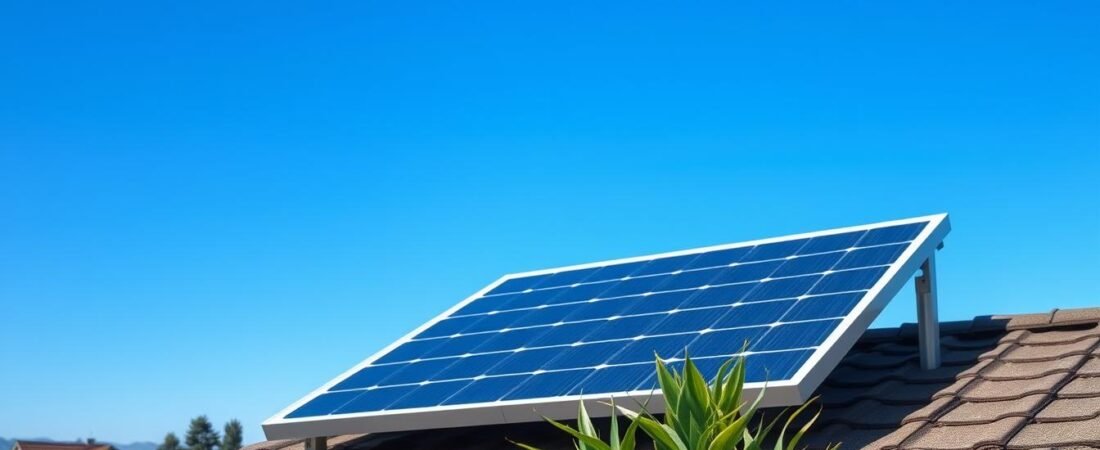
Thinking about rooftop power? This short intro lays out the basics so you can see what affects the price and value. EnergySage reports a typical 12 kW system averages $30,505 before incentives, and equipment runs about $2.58 per watt.
Most homeowners can expect large savings over time — roughly $37,000 to $154,000 across 25 years when a well-sized system replaces utility electricity. In 2026, prices remain competitive as manufacturers and installers scale to meet demand.
Remember: the final project price includes more than hardware. Racking, wiring, inverters, labor, permitting, and location all shape the total investment.
Tip: the federal tax credit and local incentives often cut the upfront amount, making installation a smarter financial move for many families.
Understanding the Average One Solar Panel Cost
A clear metric—cost per watt—lets you compare different installer quotes quickly.
In 2026 the average price sits near $3.03 per watt before the federal tax credit. For context, a 7.2 kW system usually runs about $21,816 in cash price. With the federal tax credit applied, that net drops by roughly $6,544 to about $15,271.
Remember: equipment choices affect totals. The type of inverter and higher-efficiency modules raise initial figures but can boost long-term energy savings.
- Use the per-watt figure to compare bids fairly.
- Installation costs vary by state due to labor and permitting.
- Roof layout and chosen equipment change final panel costs.
- Many homeowners offset their electricity bill over years through incentives and savings.
Current Market Trends for Solar Equipment
Equipment and electronics are driving better performance in residential systems. High-efficiency monocrystalline modules now dominate because they deliver more power per square foot. This matters for homes with limited roof area.
Solar Panel Efficiency
Manufacturers focus on higher efficiency to squeeze more watt output from fewer panels. That reduces installation time and can lower panels cost over the life of the system.
Durability has improved too—many modules are rated to last 25 years or more, so long-term energy and savings are more predictable.
Inverter Technology
Inverters now include microinverters and power optimizers that boost production on shaded roofs. These options let each panel operate independently and help avoid whole-system losses.
“Microinverters and optimizers turn tricky roofs into productive assets.”
- Microinverters: per-module conversion, simpler monitoring.
- Power optimizers: improve output on complex layouts.
Supply chain gains in 2026 and initiatives like the DOE’s SolarApp+ are easing permitting and stabilizing prices. For homeowners, that means better access to higher-quality equipment and smoother installations.
How System Size Influences Your Total Investment
Bigger systems usually deliver a lower cost per watt because fixed fees spread across more equipment.
For example, a 10 kW system often runs about $28,600 before incentives, while a 4 kW option is near $14,560. Those numbers show how system scale changes the total and the per watt rate.
Key factors are the number of panels needed and the soft costs—permits, labor, and design. Larger setups push those soft costs down per unit.
- Use past electricity bills to estimate how much solar you need.
- Installers use software to size systems for seasonal energy needs.
- A bigger system can protect against rising utility bills and increase long-term savings.
“Proper sizing balances your energy needs with roof limits and maximizes return on investment.”
The Role of Location in Installation Pricing
Where you live shapes the final price for a rooftop energy system. Local labor rates, permitting fees, and market competition all feed into the final number. States with active installer networks tend to offer better price and service choices.
Sun Exposure and Weather Patterns
Homes in sunny states often need fewer solar panels to meet the same electricity needs. That lowers the total equipment and labor required. For example, Arizona usually shows some of the lowest average prices because long sun hours and strong local competition cut per-watt figures.
By contrast, places like Nebraska or South Dakota may see higher per-watt pricing. Bigger systems in those states can offset the higher rates, but local permits and labor still push totals up.
- Local rules matter: net metering and interconnection change the return on investment.
- Weather affects equipment: heavy snow or heat can change racking and component choices.
- Use local installers: they navigate permits faster and may save you time and money.
Breaking Down Soft Costs and Labor
Soft costs and labor often rival equipment in the final project price. Permits, inspections, administrative fees, and marketing add up. Installers must cover these to offer warranties, service, and safe work.
Typical labor for an installation represents about 5.5%–7% of the total budget. Complexity — roof height, electrical upgrades, or tricky layouts — pushes that share higher. Profit margins for residential installers usually range from 11% to 16%.
“Efficient permitting and experienced crews trim both time and expense.”
- Soft costs: permitting, inspections, overhead, and customer acquisition.
- Labor: crew wages, travel, and technical labor for safe mounting and wiring.
- Streamlining: programs like the DOE’s SolarApp+ help lower paperwork delays and fees.
Ask for transparent quotes that list soft costs and labor separately. That clarity helps homeowners compare offers fairly and judge value beyond sticker price.
Learn about our installers if you want help understanding quotes and expected savings over the years.
Comparing Different Solar Panel Technologies
Different module types trade off price, efficiency, and space—so your roof and goals steer the decision.
Monocrystalline
Monocrystalline modules deliver the highest efficiency and a sleek look. They produce more power per square foot, which helps when roof area is limited.
They often carry a higher price per watt but can boost long-term savings by generating more energy over the years.
Polycrystalline
Polycrystalline units cost less up front and are a sensible option for larger roofs. You may need additional panels to match monocrystalline output.
For homeowners focused on upfront value, this technology balances performance and installation price.
Thin Film
Thin-film products are lightweight and flexible. They offer the lowest equipment price but usually lower efficiency, so they rarely suit standard rooftop systems.
Tip: consider thin-film for specialized needs like mobile setups, not typical residential installations.
“Choosing the right technology depends on your roof area, budget, and long-term energy goals.”
- High-efficiency modules save roof space and can speed payback.
- Lower-priced options need more area but reduce initial investment.
- Work with an experienced installer to match technology to your home’s needs.
Impact of Roof Characteristics on Project Complexity
A complicated roof layout raises labor needs and can change the overall project timeline.
Roofs with multiple planes, dormers, or skylights require more cutting and bespoke racking. That raises labor and extends scheduling for a typical solar panel installation.
Orientation matters. A south-facing roof at roughly 30 degrees gives the best sun exposure and maximizes energy over the years.
Shade from trees reduces output drastically. Removing trees may add $300–$1,500 to the project. Installers may instead suggest microinverters or power optimizers to keep panels productive.
Electrical upgrades are common. Many homes need a 200-amp service to handle modern systems safely, which can add a few thousand dollars to the price.
“Address roof repairs and shading before installation to protect your investment and avoid rework.”
| Roof Feature | Effect on Project | Typical Impact |
|---|---|---|
| Multiple planes/dormers | More labor, custom racking | Higher panels cost and time |
| South-facing, 30° slope | Maximizes daily sun | Better energy, faster payback |
| Heavy shade | Reduced output; add optimizers | Tree removal $300–$1,500 or extra equipment |
| Weak roof condition | Repair before installation | Saves reinstallation costs later |
- Site assessment: professional installers check structure and weight limits.
- Optimize placement: good layout boosts savings and system efficiency.
- Plan upgrades: factor electrical and roof repairs into the final price and timeline.
For more detail on how roof factors influence installation choices and pricing, see this detailed guide.
Financing Options for Your Solar Project
Financing options shape monthly bills and long-term returns for many homeowners.
Cash purchase gives the best long-term savings by avoiding interest and dealer fees. You own the equipment and qualify for most incentives and the tax credit.
Loans let you spread payments over years. That helps with upfront budget limits but can add interest and dealer fees that raise the total by roughly 20–30%. Ask about any 19.99% dealer fee so you can compare true totals.
Leases and PPAs offer $0 down and low barriers to entry. You do not own the system, so you may not get tax credits or some incentives.
“If your monthly energy savings exceed the loan payment, financing can deliver immediate cash flow benefits.”
| Option | Ownership | Typical Down | Benefits | Drawbacks |
|---|---|---|---|---|
| Cash | Owner | High | Max savings, incentives | Large upfront price |
| Loan | Owner | Low–Medium | Spread payments, own asset | Interest + dealer fees |
| Lease / PPA | Provider | $0 | Easy start, low monthly | No tax credit, lower long-term savings |
- Tip: compare APR, fees, and any transfer terms before signing.
- Talk with installers about local financing partners to find the best match for your roof and needs.
Leveraging Federal and State Tax Credits
Federal and state incentives can shave thousands off your total system price and speed payback. The federal investment tax credit (ITC) lets homeowners deduct 30% of qualified installation from federal taxes. That makes the upfront figure much easier to manage.
Many states add rebates, performance-based incentives, or SRECs that stack with the ITC. States like New Jersey and Massachusetts offer strong local programs that further lower your net outlay. Eligibility depends on your state, utility, and the exact type of system you install.
Understanding Net Metering
Net metering lets homeowners earn credits for extra electricity that panels send to the grid. Policies vary by utility: some credit at full retail value, others pay less or have time-of-use rules.
“Combine federal credits with local incentives and favorable net metering to shorten your payback period.”
- Tip: Ask your installer which state incentives apply and who handles paperwork.
- Check net metering specifics with your utility before signing a contract.
- Include expected incentives in financial comparisons to see true savings over years.
| Incentive Type | How It Helps | Example |
|---|---|---|
| Federal ITC | 30% tax deduction on qualified installation | Reduces tax liability in installation year |
| State Rebates / SRECs | Upfront rebates or ongoing credits for production | New Jersey SREC markets, MA rebates |
| Net Metering | Credits for excess electricity sent to grid | Offsets monthly electricity bills |
Hidden Expenses to Consider Before You Buy
Beyond the installer quote, several small expenses add up over the life of a system. Routine cleaning and annual inspections help keep output high and protect your investment.
Inverters may need replacement after about 10–15 years. That replacement can be a meaningful future line item for homeowners.
Roof repairs or reinforcement often come before any panel installation. Addressing roof issues first avoids rework and extra labor later.
Severe weather or accidental damage can require repairs. Many owners buy extended warranties or monitoring services to ease surprise bills.
“Plan for maintenance and likely parts replacement so long-term returns match expectations.”
- Maintenance: periodic inspections and occasional cleaning.
- Inverter: mid-life replacement after a decade or so.
- Roof work: repairs or reinforcement before installation.
- Protection: warranties and remote monitoring add upfront price but reduce risk.
| Hidden Expense | Typical Range | When It Applies |
|---|---|---|
| Routine maintenance | $100–$400 per year | All systems; keeps energy output steady |
| Inverter replacement | $1,000–$3,000 | After ~10–15 years depending on model |
| Roof repairs / upgrades | $500–$5,000+ | If roof condition or structure needs work before installation |
| Extended warranty / monitoring | $200–$1,000 upfront or annual fees | For homeowners seeking extra protection and live data |
Evaluating the Long Term Return on Investment
Calculating your long-term payoff starts with a simple payback estimate and realistic annual savings.
Typical payback for a residential setup runs near 10 years. After that point, the electricity you generate is essentially free and adds clear value to your home.
A 10 kW system can save about $1,440 per year for a typical household. Over 25 years, that adds up and often produces a total return near 10% annually, though local rates and usage change that result.
Incentives like the federal tax credit cut the upfront price and speed your break-even. Good equipment and a proper installation also preserve output and extend real savings for decades.
“Generating your own power protects you from rising utility bills and boosts long-term financial stability.”
- Compare expected annual electricity savings to the initial outlay.
- Factor in tax credit and local rebates to shorten the payback.
- Consider boosted home value and reduced exposure to future rate hikes.
Why Commercial and Residential Costs Differ
Businesses see cheaper rates per watt since large projects spread fixed fees across thousands of modules.
Commercial installations usually hit lower cost per watt—about $2.00 per watt in 2025—because procurement and labor scale up. Yet total price tags rise as projects add complex engineering, permitting, and utility upgrades.
Residential systems are smaller and simpler to install. That lowers upfront totals and shortens schedules. Homeowners also avoid many large utility upgrades that businesses sometimes need, such as transformer replacements.
“Large systems lower per-unit panel costs, but commercial jobs often need extra engineering and grid work.”
- Tax and depreciation: businesses can use accelerated depreciation and grants that improve ROI.
- Soft costs: commercial work spreads permitting and design fees across more panels.
- Practical choice: match project scale to your energy needs to estimate installation costs accurately.
| Feature | Commercial | Residential |
|---|---|---|
| Typical per-watt | $2.00 (2025 avg) | Higher per-watt; fewer panels |
| Project complexity | High — engineering, utility upgrades | Lower — standard roof and meter work |
| Financial incentives | Depreciation, grants, business tax benefits | ITC, rebates, homeowner tax credits |
| Upfront price | Large total, lower unit price | Smaller total, simpler installation |
Essential Steps for Getting Accurate Quotes
Requesting multiple detailed bids is the single best way to turn estimates into a reliable plan.
Get at least three installer quotes. This reveals differences in equipment, warranties, and the final price. It also helps you judge whether low offers omit key work.
Make each quote count: ask for a line-item breakdown showing system size, equipment brands, and expected energy production for your home.
- Provide your annual electricity use so proposals match real needs and avoid oversizing.
- Confirm who handles permitting and interconnection paperwork.
- Ask about warranty terms and installer track record on similar roofs.
Watch for bids that are far lower than others. They may use lower-grade modules or skip site prep. A solid quote should list the per watt estimate and show how the federal tax credit and local incentives affect your net price.
“An accurate, itemized quote is the foundation for smart financial planning and a worry-free installation.”
Conclusion
Choosing a thoughtful installation can shrink your utility bills and add lasting home value. A quality solar setup cuts monthly electricity needs and gives you cleaner energy for years.
Use the federal tax credit and local incentives to lower your net cost today. Those benefits, combined with reduced utility bills, often pay back the initial price well before 25 years.
Compare multiple quotes and check warranties. Good planning and a trusted installer protect your investment and keep systems productive for many years. With smart choices, your installation delivers steady energy savings and reliable service for decades.